


Vegas Crime Simulator
4.19.76K Reviews
App Specs
- Version
- 6.6.9
- Updated On
- License
- Free
- Downloads
- 100,000,000+
- Developer
- Naxeex Action & RPG Games
- Categories
- Action
- Platform
- Android
Screenshots
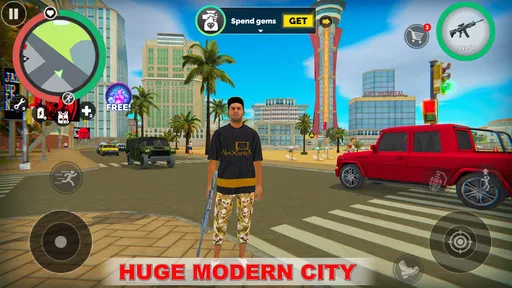


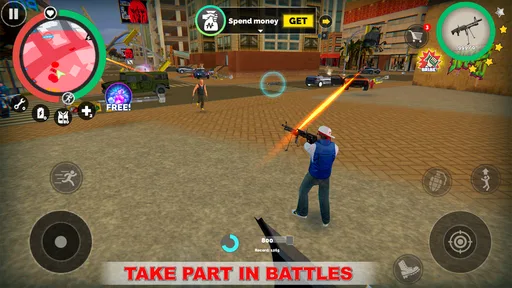
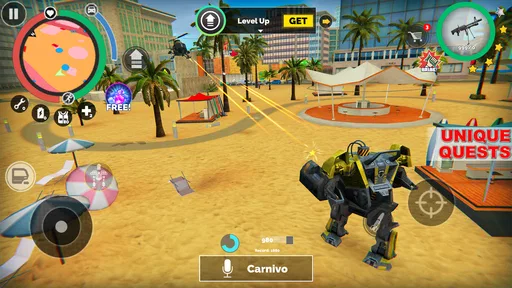
 Analysis by AppCompare
I approached Vegas Crime Simulator expecting a straightforward mobile crime sandbox, and that is exactly where its appeal lies. It puts me in a city built around gang trouble, missions, stolen cars, and constant fights, then lets me decide how much of that chaos I want to embrace. It is an action game from Naxeex Action & RPG Games, available free of charge, with an adult-oriented tone that is reflected in its Mature 17+ rating.
After spending time with it, I see it as a quick, accessible alternative to more demanding open-world crime games. It is not trying to reproduce the scale or polish of a major console production. Instead, it offers short bursts of driving, shooting, escaping, and experimenting. That makes it easy to pick up when I have a few minutes, although its rough edges become more noticeable during longer sessions.
How the current version feels to play
The current version is 6.6.7, and the game remains a recognizable example of the mobile action sandbox. The central loop is simple: move through the city, take on missions, use vehicles, confront enemies, and gradually push further into the criminal world. I never felt overwhelmed by complicated menus or a long tutorial. The game gets me moving quickly, which is one of its strongest qualities on a phone.
The city works less like a carefully authored world and more like a playground for improvised trouble. A mission may give me a clear objective, but the fun often comes from what happens between objectives. I can change vehicles, take a different route, provoke a confrontation, or simply explore until something catches my attention. That freedom is modest compared with larger open-world games, yet it gives the experience more personality than a purely linear action title.
Driving is an important part of the rhythm. Cars are not just transportation between mission markers; they are tools for getting away, reaching a target quickly, and creating distance when a fight becomes too crowded. I found it useful to think about the city in terms of escape routes rather than only destinations. If I enter an area without leaving myself a clear road out, a small mistake can turn into a frustrating chase.
Combat is similarly direct. The game is built for immediate action rather than careful tactical planning. I can move, aim, attack, and react quickly, but the controls do not always feel as precise as I would want in a dedicated shooter. On a touchscreen, the difference between a clean response and a slightly awkward one matters. I had better results when I slowed down for a moment, created space, and avoided trying to perform several actions at once.
The best way to enjoy it is to treat the city as a playful action playground, not as a realistic crime simulation. That expectation changes everything. When I stopped comparing every detail with premium console games, the rough animation, simplified traffic, and exaggerated action became easier to accept. The game is at its best when I use it for quick experimentation rather than demanding a deeply believable world.
Worth Reading Before You Choose

Flipboard Shows What News Apps Must Do Beyond the Feed

Switching to Android Auto Means Rethinking Your Driving Routine

Google Calendar Makes a Crowded Week Easier to Manage

Ludo King Makes the Most of the Minutes Between Plans

Baby Panda World Brings Quick Play to Modern Phones, but Its Game Library Feels Busy

ESPN’s Live Game View Makes Following Close Games Easier
Mission flow and everyday use
A realistic use case is a short evening break after work or school. I can open the game, complete a mission, drive around for a few minutes, and close it without needing to remember a complicated story. The structure suits players who want immediate activity instead of a long setup. It also works for someone who enjoys trying the same situation in different ways, such as approaching by car, escaping through side streets, or taking a direct combat route.
That convenience has a trade-off. The mission structure can feel repetitive if I play for a long stretch without changing my approach. Driving to a location, fighting through trouble, and escaping is entertaining for a while, but the basic pattern can lose impact when repeated too often. I recommend alternating missions with free exploration instead of rushing through objectives continuously.
One useful habit is to use free roaming as practice rather than dead time. I can learn which roads are easier to navigate, test how vehicles handle, and become familiar with the spaces where a fight may become crowded. That preparation makes later missions feel less random. It also gives the game a small layer of self-directed progression even when the objectives themselves remain straightforward.
What the latest state means for returning players
For existing players, version 6.6.7 is the relevant point of reference. The game first appeared on June 3, 2015, so it has had a long presence on mobile. I would not approach the current release expecting a completely new design philosophy. Its identity is still rooted in the same compact combination of street action, vehicles, missions, and open-ended disruption.
The long-running nature of the game is useful in one sense: the basic concept is established and easy to understand. A returning player can come back without learning an entirely different genre or control scheme. At the same time, the age of the original release helps explain why some systems feel less refined than newer mobile action games. The experience has the character of an older sandbox adapted for quick phone play rather than a modern, highly cinematic production.
I also see the current version as a practical entry point for newcomers who want to know whether this style suits them. Because the game is free to install, there is little commitment in trying the basic experience. The important question is not whether it offers the visual depth of a premium release, but whether its fast, rough-and-ready action matches your taste.
The game has attracted a large audience, with over one hundred million installs, and its average rating sits at 4.1 from around one point four million ratings. Those figures suggest broad interest, but they should not be read as a guarantee that every player will enjoy the controls or presentation. The audience is likely to include people who value accessibility and spectacle more than technical refinement.
Spending, age suitability, and device expectations
Although the game is free, optional purchases range from $0.99 to $199.90 per item. That is a wide range, so I would recommend deciding in advance whether I am willing to spend anything. The core appeal is easy to understand without immediately buying extras, and I prefer to play first, learn the systems, and only then decide whether a purchase adds meaningful convenience.
The Mature 17+ rating is important rather than decorative. The game focuses on criminal activity, violence, weapons, and an adult-styled urban setting. I would not hand it to a younger player simply because it is available on a phone. Parents should also remember that free installation and optional purchases can exist together, so device-level purchase controls are sensible when the phone is shared.
The minimum operating system is Android 6.0. That makes the game accessible to a broad range of Android devices, but compatibility alone does not guarantee an equally smooth experience everywhere. On an older phone, I would close other demanding apps, keep enough storage available, and avoid judging the game during the first few moments after launch. If performance still feels unstable, a newer device or a less demanding action game may be a better fit.
Small techniques that improve the experience
My first practical tip is to separate movement problems from combat problems. When a mission goes wrong, I used to keep fighting in the same spot, which usually made the situation worse. Driving away, turning a corner, and returning from a better angle is often more effective than trying to win a crowded encounter head-on. The game rewards that simple change in thinking even though it does not present itself as a tactical title.
Second, I try not to treat every vehicle as disposable the moment I find it. A vehicle can be the difference between a clean escape and a frustrating restart, especially when I have already learned the nearby roads. Keeping track of where I parked or where I can quickly reach another car gives me more control over the flow of a mission.
Third, I adjust my session length according to repetition. Short sessions preserve the novelty of the city, while marathon play makes repeated objectives and rough controls stand out. This is not merely a matter of patience; it changes how the game feels. Used as a pick-up-and-play sandbox, it is more enjoyable than when I expect a full evening of constantly fresh content.
A fourth useful approach is to experiment before spending money. I can learn whether the touch controls, driving model, and mission pacing suit me without treating purchases as a solution to every irritation. If the basic movement already feels uncomfortable, buying an item is unlikely to transform the game into a different kind of experience.
Where it falls short compared with alternatives
Compared with a polished premium open-world crime game, this title is smaller in ambition and less convincing in presentation. It does not offer the same level of cinematic storytelling, detailed character work, or carefully simulated city life that I would expect from a large-budget alternative. Players who mainly want a rich narrative should look elsewhere.
Compared with a focused mobile shooter, its combat is also less specialized. A dedicated shooter may provide tighter aiming, more deliberate weapon balance, or stronger competitive structure. Here, shooting is one part of a broader sandbox that also includes driving and roaming. That makes the experience more varied, but it means no single system reaches the same depth as a genre specialist.
Compared with a calm driving or exploration game, the mature crime setting is obviously more aggressive. The constant threat of conflict is central to its identity. Someone looking for relaxed sightseeing, realistic driving, or a family-friendly city game should skip it rather than hoping the action can be ignored.
The biggest limitation for me is consistency. The game can be exciting when several systems collide naturally, but it can also feel rough when controls, enemy behavior, or vehicle movement do not respond exactly as expected. That unpredictability sometimes creates funny moments, yet it can also break immersion. I accept it as part of the package, but players who value precision above freedom may become irritated.
Who should play and who should pass
I would recommend it to players who enjoy mobile action with a crime-sandbox theme, especially those who like switching between missions and unscripted wandering. It is a good match for someone who wants immediate controls, accessible objectives, and the chance to create small stories through driving and fighting rather than following a complex plot.
It is less suitable for anyone seeking a realistic portrayal of a city, a carefully written campaign, or highly accurate touchscreen shooting. I would also advise younger players and families to avoid it because of the Mature 17+ content rating. Players who dislike optional purchases should keep the in-app purchase range in mind and use spending restrictions if necessary.
Returning users should watch how the current version feels on their particular phone rather than relying on the age of the original release or the size of the audience. New users should give the game enough time to try driving, missions, and free roaming separately. That makes it easier to identify whether the appeal is genuine or whether the first burst of chaos is doing all the work.
My final take after living with the chaos
Vegas Crime Simulator succeeds because it understands the value of immediate action. I can start playing quickly, steal a vehicle, move through a hostile city, and turn an ordinary mission into an improvised escape. The free entry point makes that easy to test, and the current release preserves a clear identity built around mobile crime-sandbox fun.
It is not a replacement for a premium open-world epic, a precise shooter, or a realistic driving game. Its limitations are visible in the controls, presentation, and repetition, especially during long sessions. Still, those weaknesses do not erase its strongest use case: a compact, unruly action game for players who enjoy making their own trouble.
My recommendation is simple. Try it if you want a mature, free-to-start action sandbox and can accept an older, less polished style. Play in short sessions, learn the roads, create space during fights, and avoid spending until the basic loop has earned your interest. If that rough freedom feels more entertaining than frustrating, the game has plenty of chaotic mobile fun to offer.
Pros
- Large open world with plenty of streets and areas to explore.
- Wide range of weapons and vehicles adds variety to missions.
- Superpowers make combat more entertaining and different.
- Simple controls are easy to learn on mobile devices.
- Offline play is useful when you have no internet connection.
Cons
- Frequent ads can interrupt gameplay and become frustrating.
- Graphics look dated compared with newer open-world mobile games.
- Mission objectives can feel repetitive after extended play.
- Police chases and enemy AI are sometimes unpredictable.
- In-app purchases may be needed to progress more comfortably.
FAQs for Vegas Crime Simulator
What is Vegas Crime Simulator about?
Vegas Crime Simulator is an open-world action game set in a fictional version of Las Vegas. You play as a criminal character who can explore the city, complete missions, fight enemies, steal or drive vehicles, and cause chaos outside the main objectives. The game focuses on freedom and arcade-style gameplay rather than realistic crime simulation or a serious story.
Can I play Vegas Crime Simulator offline?
Vegas Crime Simulator is generally designed as a single-player experience and many of its core activities can be played without a constant internet connection. However, availability of offline play may depend on the version installed, device settings, advertisements, updates, or optional online services. It is best to launch the game once while connected, download required files, and then test its main features offline.
Is Vegas Crime Simulator free to download and play?
The game is typically available as a free download, allowing users to install it without paying upfront. Nevertheless, free access may include advertisements, optional purchases, or other monetization features. Players should check the store listing before installing because pricing, advertising policies, and available in-game items can change between Android and iOS versions or after major updates.
Does Vegas Crime Simulator contain violence or mature content?
Yes. Vegas Crime Simulator includes cartoon-style violence, criminal missions, fighting, weapons, vehicle theft, explosions, and other activities associated with an open-world crime game. Although the presentation is more arcade-like than realistic, it may not be suitable for young children. Parents should review the current age rating, content labels, and in-app purchase information before allowing a child to download it.
What devices are recommended for running Vegas Crime Simulator smoothly?
The game can run on many modern Android and iOS devices, but performance depends on the phone or tablet’s processor, memory, operating-system version, and available storage. Older or entry-level devices may experience loading delays, lower frame rates, heat, or occasional crashes. For a smoother experience, close background apps, keep sufficient free storage, and install the latest compatible version.


